The Belly Bulge That Won't Budge: Fixing Diastasis Recti After Baby


 RSS Feed
 Up to two-thirds of women walk around with it after pregnancy, and no amount of sit-ups is going to fix it. Diastasis recti is the separation of your ab muscles that happens when your body stretches to make room for a baby — and for most women, it doesn’t fully close back up on its own.
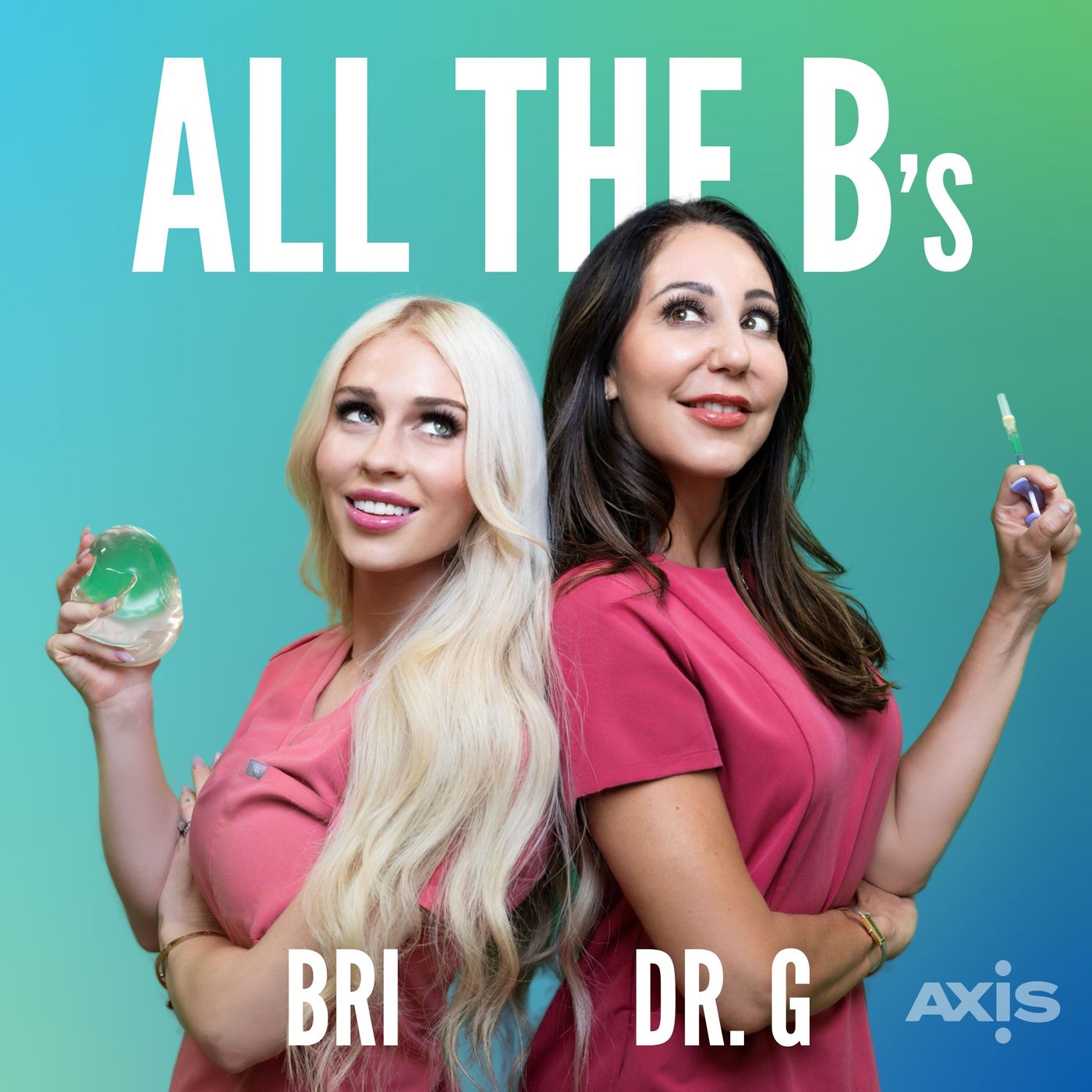
San Diego plastic surgeon Dr. Kat Gallus and scrub tech Bri break down what diastasis recti actually is, how to tell if you have it, who’s a candidate for surgical repair, and why this fix almost always comes packaged with a tummy tuck. Plus the real recovery timeline, what can stretch it back out again, and why insurance isn’t about to help you out here.
Trending stories:
E! Online, Teen Mom’s Jenelle Evans Reveals Mommy Makeover Before-and-After Photos
Women.com, 5 Celebs Who Have Bared All About Their Plastic Surgery Procedures
People, Mina Starsiak Hawk Opens Up About Diastasis Recti and Her Mommy Makeover Decision
Daily Mail, Simone Biles shares before-and-after of breast augmentation in viral TikTok
Daily Mail, Inside Jennifer Love Hewitt’s, 46, secrets to staying ‘fit and healthy’ amid Hollywood’s Ozempic craze
Questions answered by this episode:
- What is diastasis recti?
- How do I know if I have diastasis recti?
- Can you fix diastasis recti without surgery?
- Can exercise fix diastasis recti after pregnancy?
- Is diastasis recti the same thing as a hernia?
- Can you repair diastasis recti without a tummy tuck?
- Does insurance cover diastasis recti repair?
- What is the recovery like after diastasis recti surgery?
- Can diastasis recti come back after another pregnancy?
- Can men get diastasis recti?
All the B’s covers aesthetics and plastic surgery through the lens of trending pop culture stories and celebrity gossip.
Who are the B’s? The all-female team working closely with Dr. Gallus every day at Restore SD Plastic Surgery in La Jolla, California. Getting plastic surgery is a big deal, and they go the extra mile to make sure you feel super comfortable and know exactly what’s going on.
To learn more about the practice or ask a question, go to restoresdplasticsurgery.com
Follow Dr. Gallus and the team on Instagram @restoresdplasticsurgery
Watch Dr. Gallus and Bri on YouTube @restoresdplasticsurgery7487
Got a question for us? Send us a message or leave us a voicemail at itsthebs.com
Co-hosts: Dr. Katerina Gallus & Brianna Lempe
Producer: Eva Sheie
Assistant Producer: Mary Ellen Clarkson
Engineering: Victoria Cheng
Theme music: Rear View, Nbhd Nick
Cover Art: Dan Childs
All the B’s is a production of The Axis: theaxis.io
Dr. G (00:02):
You're listening to another episode of All the Bs with me, Dr. G, and my scrub tech, Bri. As you may know, up to two thirds of women, I would argue more suffer from diastasis recti after pregnancy. We both have it. And it's frustrating because you can live your best life, get back in shape, do all the sit-ups you want to do, strengthen your core, and it'll still be there. It's that separation between your rectus muscles and it just never quite comes completely back together. So today on our podcast, we're going to talk about diastasis recti or DR or rectus diastasis or separation of abdominal muscles. It goes by many different names, but we know what it is when we see it and how you can correct that surgically, which is usually a tummy tuck.
Bri (00:57):
I feel like for the sake of this podcast, we should call it DR because I feel like when you say it so many times, it's going to start-
Dr. G (01:03):
It sounds crazy.
Bri (01:03):
Say it three times fast.
Dr. G (01:05):
Yes. Yeah.
Bri (01:07):
Going to start sounding gibberish over here.
Dr. G (01:10):
I know. I do not want to say diastasis recti multiple times during this podcast. But first we got to cover celebrity news.
Bri (01:18):
Most importantly.
Dr. G (01:19):
Yeah.
Bri (01:20):
First thing first, Jenelle, back to the teen moms, Jenelle Evans. I don't know how she's ... Sorry, I was going to say it's still relevant, but ...
Dr. G (01:29):
I was like, oh, is she at Coachella? I know that's Disney or something with the Ferris wheel.
Bri (01:33):
She's got to have 30 kids by now.
Dr. G (01:37):
Yeah. So she had a tummy tuck and breast surgery, the classic mommy makeover, which I don't know, April, I feel like that's all we're doing.
Bri (01:50):
Yeah. It's been a rough April.
Dr. G (01:52):
I feel like we're going to relabel April mommy makeover month.
Bri (01:56):
Yeah. I don't know what it was.
Dr. G (01:59):
We've done several, but yeah, it involves removing that excess skin and tightening up her abs and her before and afters are exactly what you would expect. You can see how her abdomen is protruding and she had a little excess skin and fat there and they lipoed and took off the excess and tightened her up. Tight and right is what we usually say in the OR.
Bri (02:23):
Tight and right. She looks really good.
Dr. G (02:25):
Yeah.
Bri (02:25):
She's a good example of probably half her tattoo is missing.
Dr. G (02:29):
Yes. Yeah, it is unfortunate. I don't know why you would put a tattoo on the lower half of your abdomen. I don't even know why hers all didn't come out, honestly. I would've removed all of that. Anyway, I think they got most of it out. Tattoos are tough. Anytime I've tried to do a tummy tuck and skirt around the tattoo, modify what I'm doing because I'm trying to not cut into a tattoo, I end up having to go back and deal with it. They're always like, "Actually, nevermind. You can just cut right into it to get the best result."
Bri (03:02):
Right. I do.
Dr. G (03:04):
Tattoo over it.
Bri (03:06):
Yeah. Find it interesting. Like you said, it didn't all come out because don't you normally go above the belly button?
Dr. G (03:11):
Yeah. And I think they did in her. So maybe we're just seeing the teeniest amount. I don't know, on the lateral. It's hard to say. Or maybe for God's sake, she might've just re-tattooed everything, honestly.
Bri (03:25):
I don't know, but she looks great.
Dr. G (03:27):
Yeah. That headband. Okay.
Bri (03:31):
Oh, that's-
Dr. G (03:33):
Is that her?
Bri (03:33):
Is that Kanye's baby mama?
Dr. G (03:36):
Who is that?
Bri (03:36):
Wait, that's ... Julia Fox, X.
Dr. G (03:40):
Okay. I was like, wait,
Bri (03:42):
We've segued.
Dr. G (03:42):
We've just moved on.
Bri (03:44):
We're like, wow.
Dr. G (03:46):
Wait. Why does she look like ...
Bri (03:48):
She looks very vampirey. She's giving-
Dr. G (03:50):
Angelina Jolie.
Bri (03:51):
Yeah. Mixed with Elon Musk's most recent baby mama.
Dr. G (03:56):
Oh.
Bri (03:57):
Yes.
Dr. G (03:58):
Grimes.
Bri (04:00):
They look like a two. Thank you. She looks like a mix between the two.
Dr. G (04:04):
Well, good for the teen mom.
Bri (04:06):
Yeah. Good for her. I'm glad she got her surgery.
Dr. G (04:10):
We're going to cover five celebs who have bared all about their plastic surgery procedures. Yes. I think we've talked about. Did we talk about Denise Richards?
Bri (04:20):
Yes.
Dr. G (04:21):
So let's hope that she holds onto her results. And didn't Ben Taliel do her facelift? I believe so. He's probably about 200 grand right now. But you can get a not $200,000 facelift. There's nothing that those guys are doing that's different from what a board certified either facial plastic surgeon or plastic surgeon can accomplish, which is a deep plain facelift. But yeah, she looks good.
Bri (04:49):
Yeah, she looks great.
Dr. G (04:50):
Solid. I mean, honestly, until you see her befores, I thought she looked good anyway.
Bri (04:57):
Yeah. No, she's great.
Dr. G (04:58):
And then you're like, I mean, she's fine. And then you see the post and you're like, damn.
Bri (05:03):
She looks so good.
Dr. G (05:04):
Yeah.
Bri (05:05):
So hopefully it stays and like-
Dr. G (05:07):
And not falls off.
Bri (05:08):
The news like Kris Jenner's possibly.
Dr. G (05:11):
It wasn't even Kris Jenner's first facelift though.
Bri (05:14):
Because what would make that happen? The sutures maybe come undone and everything starts to
Dr. G (05:19):
Her skin just relaxes a little bit. Maybe she lost some weight. If you lose weight after facelift surgery, I'd recommend being at your goal weight.
Bri (05:30):
It's already slipping. Is that her currently?
Dr. G (05:33):
She's always filtered, so it's hard.
Bri (05:35):
Really hard to keep up with what everyone actually looks like. Granted, either way, she looks great, but yeah, there's definitely some laxity there if that's her current. It's obviously very different than what's posted on Instagram.
Dr. G (05:48):
What a nightmare though to have her now be not happy with results after you get all the publicity of having done her second or third facelift.
Bri (05:55):
Right? I don't know.
Dr. G (05:59):
I guess that's what they get $300,000 for to deal with that.
Bri (06:03):
Yeah.
Dr. G (06:04):
They get paid.
Bri (06:04):
Hard pass.
(06:05):
Big bucks.
Dr. G (06:07):
Okay. All right. So Denise Richards, I think hers will last longer because she's younger. She's in her early 50s. Ideally, she's going to take good care of herself. That's a maybe. And then just being on a regimen of skincare. I think if Jennifer Aniston had a facelift, hers would last. Her skin's in great condition. And she's lived a relatively clean life.
Bri (06:33):
Yeah.
Dr. G (06:34):
Also, no kids. She has no kids.
Bri (06:35):
That's why.
Dr. G (06:38):
I would say-
Bri (06:38):
That's why it'll stay intact.
Dr. G (06:40):
Denise Richard looks the way she does because she has kids and she was married to Charlie. Those two things will take a toll.
Bri (06:49):
That combo just ... Can't believe she didn't have one much earlier.
Dr. G (06:54):
Yeah. So Jennifer Aniston, I think that's somebody who's going to ... When she does do a facelift is going to get a great result because she takes care of her skin before, long before. Yeah.
Bri (07:04):
And she doesn't do any, or at least I think any Botox or fillers, right?
Dr. G (07:07):
No, I think she definitely does.
Bri (07:09):
Oh, she does?
Dr. G (07:10):
The only thing is I have her she smokes. So that's ... Yeah. If she's still smoking, I would say that's terrible. But anyway, all right. So we had five celebs. We had Denise Richards was numero uno. I mean, I would brag about my facelift too.
Bri (07:28):
Her boobs look great.
Dr. G (07:30):
Kylie Jenner, I feel like people are either ... I've had patients in consults that are like, "Yeah, her boobs look great or I don't want those boobs."
Bri (07:38):
That's crazy.
Dr. G (07:39):
It divides. They're pretty big for her frame.
Bri (07:42):
They are big.
Dr. G (07:43):
It's a look.
Bri (07:43):
Personally, I like that. I want those boobs.
Dr. G (07:47):
You have those boobs. Come on.
Bri (07:49):
Mine are much larger than hers, but she has a lot more breast tissue than I have. So her smaller implants look much bigger.
Dr. G (07:57):
Yeah.
Bri (07:58):
But she looks great.
Dr. G (08:00):
So we all know she had 345s.
Bri (08:03):
Her Coachella picks were fire.
Dr. G (08:08):
Yeah. She looks good. And then-
Bri (08:11):
Can't get enough of Denise.
Dr. G (08:13):
Simone has her breast aug as well, which is kind of wild because she knows she had some really tough pec muscles to get under. And I feel like there was a controversy. I think they might've went submuscular. I can't remember now, but she looks good.
Bri (08:29):
She looks so good. I just feel like everyone should get a breast aug. It's just such a good surgery.
Dr. G (08:35):
Breast augs for everybody.
Bri (08:37):
I've just had so many people lately that are like, "Should I do it? Should I not just do it? " I have never regretted, at least for me, regretted mine. You look so good in clothing, your outfits, your bathing suits. You don't have to wear a bra all the time. It just ...
Dr. G (08:54):
Yeah. Tits up.
Bri (08:55):
Yeah. Do it for the outfits.
Dr. G (08:58):
It does really change what you can wear. I do think making sure that you do something that's for your frame and this size appropriate and for the type of clothing you want to wear is important because I see plenty of women who had very large implants and maybe that wasn't their goal. I don't know.
Bri (09:15):
Yeah. And it's definitely a little ... It's harder to go smaller after you go large because most of the time you generally need a lift or so forth. Right. Because then you have the extra skin that stretch from already having the implants. Yeah.
Dr. G (09:27):
So it's a little harder to downsize. But I do think now if you want to just like the ballet body a little bit small implant, there are multiple ways to accomplish that, including preserve. Yeah.
Bri (09:40):
Lunchtime breast aug.
Dr. G (09:41):
Yeah. Or if you just want a little volume, you could do alloclae, so fat transfer, but it's not the, we're going to ace wrap you and you're going to have to walk like a teranosaurus rex with your arms pinned to your side for two weeks. That's not today's breast aug. So it's a lot faster recovery. The implants are better quality, softer.
Bri (10:04):
Last longer.
Dr. G (10:05):
Nobody's throwing saline in unless you already had saline and you like that. I just think, yeah, it's a good option.
Bri (10:14):
Just get the boobies. Megan Fox. I mean, she looks so good, especially having another baby. She looks ... And she needed a little post-machine gun Kelly glow up, that post-breakup.
Dr. G (10:30):
Yeah. She's had, I mean, probably everything done.
Bri (10:34):
Yeah. She looks great no matter what.
Dr. G (10:37):
Yeah. She's doing well.
Bri (10:38):
Go make and go.
Dr. G (10:41):
Yeah. She's not gatekeeping anything.
Bri (10:45):
She's got a bunch of lifts and stuff.
Dr. G (10:47):
She's had her implants in, or implants out. I feel like she had buccal fat pad removal.
Bri (10:53):
And an armpit sucked out.
Dr. G (10:55):
Yeah.
Bri (10:56):
I love that. I did that too. I assume she's talking about lipo on the little chicken nuggies, right?
Dr. G (11:02):
Yeah, I think so.
Bri (11:02):
Yeah. That's also the best surgery. If you're going to do a breast aug, just do that too at the same time.
Dr. G (11:07):
Yeah. Get the chicken nuggets. That's what we call the little tiny bit of fat that sits right between your bra line and your armpit
Bri (11:15):
Yeah. That extra little friend just ...
Dr. G (11:18):
Suck that out. Little bruised for a while and then it's good to go.
Bri (11:22):
You're good.
Dr. G (11:24):
Yeah. Nobody likes the chicken nuggets.
Bri (11:26):
Mm-mm.
Dr. G (11:27):
And then let's see. I think that's it. That's our five. So Nina- I'm going to butcher her name. Starsiacawk. What?
Bri (11:41):
Wait, it does not ... Oh, I think we needed to say ... I thought you said cock. I think we needed to say hawk separately.
Dr. G (11:49):
Hawk.
Bri (11:49):
Hawk.
Dr. G (11:50):
Hawk.
Bri (11:51):
Starsiak Hawk. Opens up a better diastasis recti and her mommy makeover decision. I love that these people wrestle with a decision. It's a decision. You had ...
Dr. G (12:06):
I think that just makes good headlines.
(12:08):
Yeah.
Bri (12:09):
I didn't even know. But yeah, good.
Dr. G (12:12):
I don't know who she is.
(12:16):
Same Zs. Oh, HGTV. Okay.
Bri (12:19):
Self-maintenance. Ugh. We need to get on two chicks and a hammer.
Dr. G (12:25):
Okay.
Bri (12:26):
I love that.
Dr. G (12:27):
We probably should be watching that, honestly. Because if you've seen some of the stuff we've done around this office, sometimes it's two chicks and a hammer.
Bri (12:36):
It literally is.
Dr. G (12:36):
Which we can never find. Where's the fucking hammer?
Bri (12:38):
Oh, I bought a new pink one.
Dr. G (12:39):
Thank God.
Bri (12:39):
Yeah. Everything's pink. Our drill is pink. Our little hammer is pink or screwdriver. I'm like, Bob, the builder over here, man. And then things fall off two months later. I remember one time I tried to hang some things in the office and then they fell off. So her husband came in to fix them and he was like, "Who on earth would hang this and not put studs in? " I was like, "I don't know. " And then he kept talking shit about all this stuff. And I was like, "I hung all this stuff." He's like, "Oh, I'm so sorry." I was like, "No, it's fine. I don't know what I'm doing anyways." But I've learned. I've gotten really good. I may have thrown this into the office next door, but no one has done anything yet.
Dr. G (13:25):
The office that this is kind of the end of our office space. And so concierge medicine's on the back end of this. They have little screws sticking out.
Bri (13:35):
Out that back door. If it ever falls off, there's going to be all these little peep holes.
Dr. G (13:42):
We see you. Oh my God.
Bri (13:45):
Two chicks in a pink hammer. Subscribe to that.
Dr. G (13:50):
We're always like, we're strong independent women.
Bri (13:52):
Yeah, all the time. Yeah. It's fine.
Dr. G (13:56):
It's fine. It's fine.
Bri (13:57):
It's fine. We might have a side career.
Dr. G (14:00):
I don't think so. I think Mina Hawk is probably better suited to be doing that. What a name. Okay. And then Jennifer Love Hewitt, who's sort of in that Anne Hathaway category of people that some people just really don't like her, but she stays fit and healthy amid Hollywood's Ozempic craze. And she has used EmSculpt Neo, which I feel like is a triggering word.
Bri (14:30):
And Ozempic.
Dr. G (14:31):
And Ozempic.
Bri (14:33):
She looks so good.
Dr. G (14:35):
Oh yeah. I forgot her heavy phase.
Bri (14:40):
I just don't believe she didn't use Ozempic.
Dr. G (14:42):
Yeah. I feel like it's the people who say they don't use Botox.
Bri (14:45):
From that top photo of her.
Dr. G (14:49):
It's not.
Bri (14:49):
It's just, I want to say yes, but it's not giving that. But she looks so good. I
Dr. G (14:56):
Think it falls in this category of like, "I didn't use Ozempic. I used Mounjaro."
Bri (15:01):
Yeah, exactly.
Dr. G (15:02):
Asterisk.
Bri (15:03):
I use a totally different one, so it's fine.
Dr. G (15:06):
So it's okay. So I can, with a straight face say I didn't use it. I don't use Botox. I use Daxxify. Yeah. You're like, "Get out. " I know. That's what you're doing. I mean, maybe she didn't do clean eating, but I don't think so.
Bri (15:20):
Good for her if she did. And
Dr. G (15:23):
Then the EmSculpt, I mean-
Bri (15:25):
I want an EmSculpt in this office so bad. I just need one.
Dr. G (15:30):
Bri just wants one for personal use.
Bri (15:32):
Yeah, not for anyone else, just so I can do it on my lunch break.
Dr. G (15:35):
I know, which is all it's good for, honestly. Jennifer Love Hewitt probably has one at her house, honestly, at this point. That would be great, but-
Bri (15:43):
That's what I want for my Christmas gift this year. An EmSculpt machine.
Dr. G (15:48):
And aim high, aim high.
Bri (15:50):
Yeah.
Dr. G (15:51):
The problem with owning one as a business owner is that the treatments have to be repeated and ongoing. Otherwise, whatever result you get disappears. So it's toning and burning a little bit of fat, but it's mostly toning muscle by creating muscular contractions over a 30 minute period. And so you have to do weekly treatments and then you get to kind of your goal and then you need to do maintenance, much like, I don't know, going to the gym.
Bri (16:24):
And the treatments are, at least from an office that I worked in prior the treatments are super expensive for just three treatments, but you have to keep on doing it.
Dr. G (16:34):
Right. And who wants ... You could go to the gym or you could go get-
Bri (16:38):
And you really need to have zero body fat.
Dr. G (16:43):
Yeah, because you're going to need to be able to see the muscle that you're building.
Bri (16:45):
That's why it works so well for me because I literally have no fat on top of my muscles, so it would be perfect. But before, when I did do it at the office all the time on my lunch break, you don't see anything. I then had a bunch of lipo and I saw things.
Dr. G (17:01):
Then you're like, oh, there it is.
Bri (17:02):
Yeah. But you don't see it unless you're absolutely just zero body fat.That's kind of the crappy part.
Dr. G (17:10):
Yeah.
Bri (17:11):
You're not just going to have abs.
Dr. G (17:13):
I feel like it would be a great ... Positioning it in a derm office or plastic surgery office was their mistake. I would have positioned it in a gym. That would be great. Go work out, pay a nominal fee, and then a super duper target, like your abs or your booty or something.
Bri (17:30):
It's like 30,000 crunches or something.
Dr. G (17:31):
Yes. And then leave. So instead of getting in the infrared sauna or the cold plunge or whatever, just do a little EmSculpt.
Bri (17:39):
Do you think that would help your diastasis recti?
Dr. G (17:42):
It won't hurt. It'll definitely help it as much as possible because you're strengthening those muscles.
Bri (17:48):
Another reason we need it in office.
Dr. G (17:52):
Sure.
Bri (17:53):
Self-care era. Okay.
Dr. G (17:57):
I just think that's ... If I was a gym owner, that's probably what I would get, but I don't know. I don't know what the ...
Bri (18:03):
Yeah.
Dr. G (18:03):
Whether they can or not.
Bri (18:04):
Well, good for her. She looks fabulous.
Dr. G (18:07):
Yeah. Props to Jennifer Love Hewitt. All right. Well, let's talk about diastasis recti or DR. I think we already mentioned that it is a separation between your rectus abdominis muscles. So the six-pack muscles that run down the center of your abdomen, they get separated out generally with pregnancy. Guys can get it too. It can separate with weight gain that happens too fast or-
Bri (18:37):
Oh, interesting.
Dr. G (18:38):
Yeah. And then-
Bri (18:40):
Anyone can get it, not just from pregnancy.
Dr. G (18:43):
Yes. However, comma, men are not great candidates for correcting this. I've seen it before because they tend to hold their weight intraabdominally, so like visceral fat and they just strain against that abdomen. So when you try to correct it with suture, they tend to pop it open. Whereas women, you get it corrected and then it just maintains because it's just stretched. There's not this pressure against it. Once you've had the baby and gotten back down to your goal weight, you're just a little stretched out. The number of times I've treated women who had a diastasis where they look pregnant still because their abdominal wall is so stretched out, it's really stressful and depressing for them because people will ask someone the babies do, which I think is bananas. I never ask any ... Why?
Bri (19:40):
It's 2026. Y'all should know not to do that.
Dr. G (19:43):
That's like running around and being like, "What's your weight? Are you about ... " What?
Bri (19:48):
Yeah.
Dr. G (19:48):
What?
Bri (19:49):
I would just throat punch you if you asked me my weight. Oh wait, somebody guessed my weight and ...
Dr. G (19:57):
What?
Bri (19:57):
This wasn't too long ago. I don't remember who it was. I don't remember if ... I don't think it was Dr. Abraham or someone and they're like, "What are you? 150, 160?" I'm like, he's like, "I don't know weight." I was like-
Dr. G (20:10):
So then shut your mouth.
Bri (20:11):
Yeah. That's like 35 pounds more than I weigh.
Dr. G (20:19):
Who said that?
Bri (20:21):
I don't remember, but now it just brought it back the memories.
Dr. G (20:24):
The trauma.
Bri (20:25):
The trauma.
Dr. G (20:26):
I would say-
Bri (20:27):
So rude.
Dr. G (20:28):
If you're ever asked to guess, no woman is ever over a hundred pounds or older than 21. Those are your two. Absolutely. If you have to guess.
Bri (20:36):
Don't do it.
Dr. G (20:37):
100 pounds, 21.
Bri (20:39):
Oh, somebody at the river guest I was 34 and I was like, you're
Dr. G (20:43):
Yes, no. 21.
Bri (20:44):
Yeah.
Dr. G (20:45):
Just say 21.
Bri (20:46):
I think the kid was like 23 or something. Yeah, because I don't know. This is why you'll never have a wife. No offense. This is why you also don't have a girlfriend.
Dr. G (20:57):
Yes. Tell me again why you're single. Oh God. Okay. So yes, it's very disturbing. I've had women cry telling me, I walk around and people ask me when's the baby due? And
Bri (21:13):
Yeah, that's rough.
Dr. G (21:15):
You're like, "That's stupid." So for those patients, it's super dramatically life changing because you're not only kind of correcting that little bit of tightening it up, you really are making them walk around, not look pregnant. So it's nice. That being said, sometimes for those patients, because they've been stretched out like that for a while, I don't think it's a bad idea to do either physical therapy to sort of train your muscles because once your muscles get stretched beyond a certain point, they sort of can't engage. They lose the ability to fire off. And so when you tighten everything back up, it still is loosey goosey. That's number one reason. So try to focus on at least activating those muscles, even if not much is happening. And then number two, wearing a waist trainer or some sort of abdominal binder pre-surgery. So your organs get used to being back in the abdomen because it's like everything gets squished back in and that's a weird sensation.
(22:22):
And again, your body's going to fight that wrap. Because if you think about it, when you stretch out during pregnancy, it doesn't happen overnight. It's incrementally over 40 weeks. So I also say after pregnancy immediately after, you just have to give yourself some time to bounce back. Like you don't want to do this procedure right after delivering. Or at the time of C-section, which I bore witness to when I was in training.
Bri (22:50):
That's crazy.
Dr. G (22:51):
Terrible, terrible idea. So
Bri (22:53):
Crazy.
Dr. G (22:53):
I feel like it might've been trendy in Hollywood for a moment, and that's why all the celebrities were having C-sections because they could get a little tummy tuck at the same time, which again, sounds-
Bri (23:06):
But you're still going to need more. You're just going to lose all that weight.
Dr. G (23:09):
I know. It sounds like a good idea in theory and is a terrible idea in reality because your uterus is ginormous. You're totally swollen. You have all this fluid on board. The one time I did it when I was in training, not by choice, we were shoving the uterus back in.
Bri (23:30):
Yeah. You should really, no.
Dr. G (23:33):
No. No. Terrible idea.
Bri (23:34):
Don't do it.
Dr. G (23:35):
So you want to give yourself, you got 10 months to get there. You want to give yourself probably the same amount of time to get back a year after having a kid to get back to a baseline and a lot of times more. Because again, once you have the abdominoplasty, you're a little bit out of commission and that might be hard when you have a one-year-old. So we talk about this all the time, but making sure you have support, time for adequate recovery. If your child is the kind that wants to be held all the time and you're picking them up and you don't have good support, then that's not the time to do a tummy tuck.
Bri (24:10):
Yeah.
Dr. G (24:11):
You need the night nurse or whatever.
Bri (24:13):
You need help.
Dr. G (24:14):
Help.
Bri (24:15):
Yeah. You need help. You need to be at your goal weight. Don't plan on getting a tummy tuck and then like, "Oh, I want to lose 50 more pounds."
Dr. G (24:22):
Yeah. And also if you've had a kid but you're planning another kid, just wait until you're done having kids. That seems obvious, but I feel like- But it's not. One of the first tummy tucks I did was on somebody, I was an intern. It was my first rotation as a doctor was on plastic surgery and we did a tummy tuck. I was like, "This is the best thing ever." So we do a tummy tuck on this woman who was an anesthesiologist at our hospital. She did great. She got me a thank you card and a gift. And even though I was like the intern on ... You know what I mean? Yeah. And I was like, "Wait, we get gifts?" You take someone's gallbladder out, you do not get a gift generally speaking. So I was super stoked. Then I went on to do, I did internship, I did general surgery, I was with the Marines for two years. Anyway, so long story short, I end up back at the same hospital 10 years later and I see her and I was like, she was pregnant and I was like, "What?"
Bri (25:27):
Girl.
Dr. G (25:28):
But in her defense, she had had two kids. She was married. She got divorced. She got remarried.
Bri (25:35):
Just don't know what's going to happen.
Dr. G (25:36):
And then was having a kid with a new husband. So
Bri (25:40):
Does that ruin everything? I feel like it would be hard if that was all sutured up too. Does it just go right back through?
Dr. G (25:49):
Yeah. It doesn't prevent you from ... It doesn't impact your pregnancy. So if you do get pregnant, it's not a big deal. You can stretch everything out again. Maybe knowing that you've had a tummy tuck, maybe you gain as little weight as possible or I don't know. You're just going to have to see what happens. It's hard to know whether you might need one again or not. Brutal.
Bri (26:18):
Yeah.
Dr. G (26:19):
But yeah, I mean, we see people who've had tummy tucks before maybe 10, 20 years ago, and they had implants in at the same time. So now they're coming in for an implant revision. And some of them, their abdomens look awesome. And some people gained weight again and lost weight. Nothing's permanent unless you stay at your same weight, essentially.
Bri (26:44):
Yeah. Can you self-diagnose having a diastasis or do you need imaging?
Dr. G (26:50):
Oh, no, you don't need imaging.
Bri (26:53):
Stick your fingers in there.
Dr. G (26:54):
Yeah. I mean, you can basically, what I would do is lay flat on your back and put your fingers in your center of your abdominal wall and then come up and do a crunch. And then you can kind of feel where that separation is. And if it's ... Sometimes you can suck that separation in and sometimes it bulges out, but either way you can see it when you're flat on your back. And so that's what I do in clinic is I have the patient lay flat and then I have them come up and do a crunch. And it's kind of funny because some people do a sit up. I'm like, "Okay, you're okay. Just a little crunch. That's all I need to see."
Bri (27:33):
Yeah.
Dr. G (27:34):
And then you can try. So I guess you would only need imaging if you were concerned that you had a hernia. So diastasis is a separation of the abdominal wall, so it's like stretched out whereas a hernia is a complete defect, like a hole. And a hernia is a different problem because if you have a hole, things can come out the hole. So bowel, internal, whatever. That is a different surgery. It usually needs to be fixed by a general surgeon and that's a hernia repair. You can have both. Commonly, people have an umbilical hernia, so one around the belly button at the same ... That we can correct generally speaking at the same time as your abdominoplasty. But a hernia elsewhere, that needs to be addressed. That's called a ventral hernia. So that would be instead of a separation, like an actual defect where internal organs can come out. And so that's treated with general surgery and generally speaking with a mesh.
Bri (28:34):
So is the only way to repair the diastasis through a tummy tuck? You have to do like a full tummy tuck to repair.
Dr. G (28:41):
Yeah. I mean, you really shouldn't be doing anything but repairing it from all the way from the bottom of your ribcage to the top of your pubic bone. If you try to just do halfsies, then the other part of your abdomen overcompensate. So let's say you tighten up the lower part of your abdomen, the upper part of your abdomen tends to then look more bulgy relative to that. And then same, vice versa. If you for some reason got up here and tightened this up, then your lower is going to bulge out. So in order to get all the way up there, I need to make an incision that's pretty long on the bottom and then either take the belly button off with the flap or cut around it. So it's usually part of the tummy tuck. I have one patient that just has a diastasis, and so we are going to make that incision and what we call float her belly button.
(29:36):
So leave her belly button attached to everything and then just get up in there, fix the diastasis and kind of lay everything down. But that's pretty rare. She's like a competitive swimmer or something, so she's like no body fat, no extra skin really, and just really needs the abdominal wall tightened up. Oh, nice. And it can be functionally helpful. I did a study when I was in the Navy on women who demonstrated that they had a weaker core prior to having the surgery and then they worked with a physical therapist, that's who I did the study with, to tighten and kind of activate their core. And then we did the tummy tuck and then they took six weeks off from that and then went back to physical therapy, got back to their baseline and then were able to demonstrate an improvement. They could make bigger gains afterwards than they could prior to, because bringing everything together just kind of strengthens your core.
(30:35):
And so in that run of patients, I had a girl who could then do more sit-ups afterwards because that's part of our physical fitness training tests that we had to take every year. And then I had somebody who sang opera who also was able to kind of regain whatever it is that they need to because they're like singing deep, engaging their core to kind of improve that. And both of them were really stretched out. The one girl had had twins and then the opera singer was so thin. I haven't seen it again, and I've done a lot of tummy tucks. She was so thin and very stretched out. And she was like, one of my typical patients, so like 4'11" and 90 pounds or whatever, like a tiny person. And where the separation was was like you could see, it was like an aquarium, you could see into her abdomen.
Bri (31:32):
That's crazy.
Dr. G (31:33):
The bowel was right there. And I was like, oh God.
Bri (31:36):
Damn.
Dr. G (31:37):
Yeah. So normally I'm not stressed about sewing that up because you're still pretty far from being inside the abdomen. But with her particularly, I was very careful because you could just one stitch and be looping some bowel in there, which is crazy, but she did great. I remember thinking, oh, she's so ... Probably if she had continued on, I feel like that fascia layer was so thin, it would've become a hernia. It would've eventually separated and then she'd have a new problem. So it was definitely functional in her case.
Bri (32:16):
How do you make sure that the repair stays, like the suture? I feel like if I got that, I'd be nervous that I was going to pop it all out.
Dr. G (32:22):
Pop it. Okay. So yeah, so much like a hernia repair or anything else when you're closing things down, there is a debate on how you close it. I feel like we talked about that in the OR the other day with our UCSD residents. So I think they've done a study that showed that you could use an absorbable suture one layer and be fine. They did a CT scan before and then after, and then after months later and showed that the repair stayed. What you really want is that repair to stick for six weeks. And once you've gotten out of that six week window, your body has like kind of scarred in and it should maintain no matter what. Like you're not going to hurt any, you're not going to
Bri (33:03):
Okay.
Dr. G (33:04):
Even if you pop the stitch, your body has scarred in there and it's not going to-
Bri (33:09):
Budge.
Dr. G (33:10):
... fall apart. That being said, I generally do a layer of permanent sutures, right? Interrupted to close everything. And then I run it over with a very long acting suture, so not permanent, but lasts for a long time. So that if either one of them fails in that six weeks, you have a really aggressive cough or you do something stupid that you're not supposed to or whatever. Let's say you get pneumonia. I don't know. I'm hedging all the bets by doing those two layers that we know you're going to be good until six weeks. And then after that, it doesn't matter, but it's still holding. So that's why I say if you get pregnant afterwards, I mean, theoretically it's holding it together, it's scarred in, but it's that slow pressure on it of either weight gain or pregnancy that could potentially stretch it out again. It won't be a burpee or something like that.
Bri (34:08):
Something more aggressive.
Dr. G (34:09):
Yeah. Reverse weighted burpees or whatever I did in class the other day that was like not fun. I thought-
Bri (34:18):
Something you should be doing.
Dr. G (34:20):
Yeah. You don't want to do that in the first six weeks after your surgery, which most people are not looking to do. The first couple weeks of recovery are you're bent over, you're not thinking about doing anything. It's probably week four to week six where you really feel like you need to be working out again, but then you can work out, just don't do anything too aggressive with your core.
Bri (34:39):
So take the six weeks wear your garment, stay in compression. Six weeks really of doing nothing.
Dr. G (34:46):
Yeah. Or minimizing things. That is really how I correct the diastasis is with sutures that's pretty traditional. I would say the thing that we do that makes a difference, because I tell patients, everybody who's had a C-section is like, "Is it as bad as a C-section?" And I'm like, "Yes." So intuitively, that doesn't make sense.
Bri (35:07):
Even though you're not really going through, cutting through all that muscle and everything.
Dr. G (35:13):
Which is wild because a C-section, we're cutting through the abdomen-
Bri (35:16):
So many layers.
Dr. G (35:17):
... to get in to the-
Bri (35:19):
It's brutal.
Dr. G (35:20):
Yeah. C-section's not pretty. But what I think the difference is, is C-section, you have baby.
Bri (35:25):
Yeah, that's true. You have a baby to distract you.
Dr. G (35:29):
You're like, I kind of ... Oh, baby. And you have oxytocin and hormones and-
Bri (35:35):
All the things.
Dr. G (35:35):
And your skin is kind of a little flabby because you just delivered your baby. Tummy tuck, we're not cutting through, but we are bringing those muscles together and that hurts a little bit. And then we're pulling your skin really tight. And the thing that helps my patients is the tap block, as you know.
Bri (35:58):
Yeah, so much.
Dr. G (35:59):
Yeah. So we do a nerve block when you're asleep under ultrasound guidance. My anesthesiologist likes to help.
Bri (36:08):
He loves to chime in. It gives him purpose.
Dr. G (36:11):
Argue with the other scrub tech about it.
Bri (36:13):
Yeah, he really likes to argue.
Dr. G (36:15):
Or educate, I think is the word. Anyway, so we're all looking at the ultrasound, and so he loves to point out what layer I need to go to, even though I'm pretty sure I'm clear on it, but that's fine. So it's good to have input. We look on the ultrasound, we use a blunt catheter and then inject marking, which really helps prevent too much pain afterwards. People are generally speaking way more comfortable than if you don't do that.
Bri (36:43):
Yeah, so much better. And I think any way ... Well, I'm going to jinx it, but we've not had to go down and get anyone in a wheelchair since you started doing the tap blocks. Right. Yes. Which is also nice because then when you're moving, it helps you heal a little bit faster and you're not just sitting there doing nothing.
Dr. G (37:00):
Correct. Yeah. You want to move around a little bit. So I think although that suture repair is what is the most uncomfortable part of a tummy tuck, so I have done skin only for people who don't have a diastasis or are interested in a much shorter recovery, like have a minimal diastasis. I mean, almost everybody has some diastasis, but are interested in a shorter recovery, you can say, "Yeah, your recovery would be a lot shorter if I just take skin, even if it's a lot of skin because the abdominal wall being tightened is what is the uncomfortable part."
Bri (37:36):
Yeah. What functional improvements does the diastasis recti repair give to patients?
Dr. G (37:42):
I feel like you just feel stronger in your core, right? You're engaging your core, which is part your 360 core includes your lower back, so that's important. And I do think your posture can be better. I don't know that incontinence is better afterwards, but that's been talked about, but I do think it does-
Bri (38:01):
How would that help incontinence?
Dr. G (38:03):
That gets complicated with the bladder and engaging core and stuff.
Bri (38:08):
Wouldn't a kegel be better?
Dr. G (38:10):
Yeah, I think so.
Bri (38:12):
Do your kegels now.
Dr. G (38:15):
Yeah. Like I said, I did do a study that showed that it did create an actual measurable functional improvement afterwards. But again, it's best if ... If you don't do any exercise before and you don't do any exercise ever again, are you going to notice a functional improvement? Probably not. But if you're working out before and you will see improvement afterwards, I think that's fair to say. And I do think it does help with lower back pain and all that stuff over time because it's just adding to your core. Amen. I think it's important. Is insurance ever going to cover it for that? No, because it would be really hard to tease that out. Insurance doesn't recognize it as a coverage issue. What they do recognize is something called a panniculectomy, which has nothing to do with your abdominal wall muscles and has everything to do with overhanging skin in your lower abdomen.
(39:09):
So if you have what we call a pannus, but a big roll of skin and fat that's hanging below your pubic bone, and there's a rash underneath that, and you're talking in morbidly obese patients or major massive weight loss patients, they will cover a panniculectomy. And that is a functional problem. Where I trained in Indiana, there was a much larger population and we had some panniculectomies we did functionally. They could not walk because the pannus was hitting their knees like crazy. Or we would do a panniculectomy in conjunction with the OB- GYNs because they needed to do a procedure, like deal with the uterus or whatever, and they can't get to the uterus without us taking off the pannus. So really wild, like 400 pound people.
Bri (40:06):
Oh my goodness.
Dr. G (40:07):
But that's completely different ball game. That is not like I have this loose skin and a little bit of overhanging skin and my abdominal wall is stretched out. Insurance is like, that's cosmetic, not functional. So yes, not covered by insurance, but is a popular procedure, mostly women who've had kids or massive weight loss. And if you're going to do it, you might as well factor in whether you want to have your breasts done at the same time because then you're a one and done surgery.
Bri (40:39):
Yeah. Just do the mommy makeover.
Dr. G (40:42):
Just get it over with.
Bri (40:43):
Get it over with.
Dr. G (40:45):
Yeah.
Bri (40:45):
Yeah. I wish I could repair my diastasis without getting a tummy tuck.
Dr. G (40:49):
I know. I mean, you can, but ...
Bri (40:51):
You heard it here, folks.
Dr. G (40:53):
I would too, but I just-
Bri (40:54):
Pencil me in.
Dr. G (40:55):
Don't want to take six weeks off from doing stuff. Yeah.
Bri (40:58):
That's true.
Dr. G (40:59):
I'm just a brat about that.
Bri (41:01):
Doctor's man.
Dr. G (41:02):
I know. I need a ... Maybe the EmSculpt's looking better.
Bri (41:06):
See, there we go.
Dr. G (41:08):
Okay. Well, if you have questions about whether you have a diastasis, whether you think you're a candidate for abdominoplasty or you just have more questions about plastic surgery in general, reach out, DM. Yeah. Call the office. We're here for you.
Bri (41:23):
Yep. Always.
Dr. G (41:25):
Yes. All right. So we're going to scrub in.
Bri (41:27):
And scrubbing out.
Dr. G (41:30):
If you're listening today and have questions, need info about scheduling, financing, reviews, or photos, check out the show notes for links. Restore SD Plastic Surgery is located in La Jolla, California. To learn more about us, go to restoresdplasticsurgery.com or follow us on Instagram @RestoreSDPlasticSurgery. If you enjoyed this episode, please share it and subscribe to All the B's on YouTube, Apple Podcasts, Spotify, or wherever you like to listen to podcasts.